Six days in the world's biggest city, with two kids who love robots, ramen queues and train windows — and a flight home on New Year's Eve.
FACTS in normal text. SPECULATION in italics.
Zeus · Sept 2026 · Internal
Section 01
The trip at a glance
Confirmed tickets: the family flies Beijing → Tokyo on Saturday Dec 26, 2026, spends five full days and one final morning in the city, then departs Tokyo → Singapore on Thursday Dec 31. This is the Tokyo leg of the longer winter trip — the Beijing and Chongli legs have their own guides.
Tokyo days
Dec 26–31
Sat arrival → Thu departure
Weather
5–12°C day
2–7°C night · dry season, rain rare
Money math
¥100 ≈ S$1
Rough mental conversion, ≈S$0.95
Hardest deadline
Miraikan
Open ONLY Dec 25–27 → go Dec 27
Getting in: the flight lands from Beijing at either Narita (NRT) or Haneda (HND). From Narita, the Narita Express runs direct to Shinjuku in about 80–90 minutes (source); the Airport Limousine Bus stops at both the Hyatt Regency Tokyo and Park Hyatt Tokyo (source). From Haneda, the train to Shinjuku runs about ¥730–770 and 40–60 minutes (source). Grab Welcome Suica cards for everyone at the airport on arrival (source).
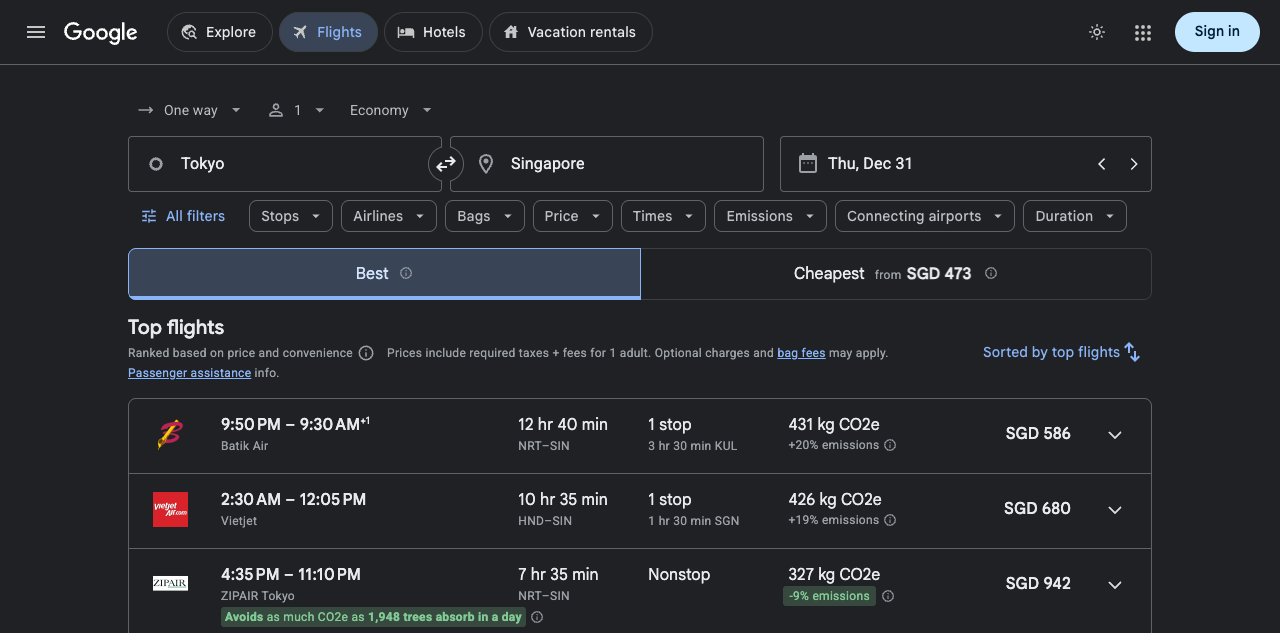
Getting out: on Thursday Dec 31 the plan is a New Year's Eve departure from Narita on the researched ZIPAIR direct service to Singapore, which scanned at about S$942 when booked (source — fare snapshot, prices move daily). Trains run normal daytime service on Dec 31 (source), so airport access is not a New Year problem.
Weather reality check. Late December is Tokyo's dry season — cold, crisp and usually clear, which is exactly what you want for Shibuya Sky and Skytree sunset slots. Mt Fuji from the observation decks is a real possibility on those mornings (source).
Where to stay — the Hyatt question
The food-and-hotels research puts one answer clearly ahead for this family: the Hyatt Regency Tokyo in Shinjuku is the pick. It is the only one of the three where a family of four genuinely fits in one standard room without booking two, it sits directly on a subway station (Tochomae) ten minutes' walk from Shinjuku Station, and the Airport Limousine Bus stops at the door.
Pick 1 · Best family value — recommended base
Hyatt Regency Tokyo (Shinjuku)
The family case: 33 m² twin rooms with two plush twin beds plus a sofa bed — a real family-of-four room, which is rare in Tokyo (source).
Location: Nishi-Shinjuku, directly connected to Tochomae Subway Station, ~10-min walk from Shinjuku Station (source).
Late-Dec rates: roughly US$313–341/night (≈¥45,000–50,000); January is its cheapest month, so late December runs higher — book early (source).
Airport logistics: Airport Limousine Bus stops at the hotel (~120 min to Narita); Narita Express via Shinjuku Station is the alternative (source, bus stop). City tax ¥100–200/person/night at the property (source). Book at hyatt.com.
Pick 2 · Best location + comfort
Grand Hyatt Tokyo (Roppongi Hills)
The family case: ranked #1 of 11 Roppongi hotels on Tripadvisor with family-positive reviews; mall dining and cinema on-site at Roppongi Hills, kids menus at nearby restaurants (source, kids' menus). Three minutes from Roppongi Station on the Hibiya/Oedo lines (source).
Late-Dec rates: standard rates ~US$500/night in season; late December ¥90,000–130,000/night — a big step up from the Regency (source). Book at hyatt.com.
Pick 3 · The splurge icon
Park Hyatt Tokyo (Shinjuku) — reopened
Status: reopened after a 19-month restoration announced Dec 9, 2025 — fully open for Dec 2026 (source, Time Out). The Lost in Translation icon: 171 rooms including 29 suites atop Park Tower (source), New York Grill with 360° views and live jazz (source).
Late-Dec rates: December is its most expensive month — average US$1,758/night (≈¥260,000) (source). Better as a treat night than a family base. Book at hyatt.com.
Considered and skipped: Hyatt Centric Ginza — great location, but year-end rates commonly start at ¥100,000/night, the worst value of the Tokyo Hyatts in late December (source). Late-Dec booking warning: the Dec 21–31 window carries Christmas and year-end premiums and Shinjuku/Shibuya/Ginza hotels sell out first — book now, not on arrival (source).
Section 02
Critical flags — read before booking anything
Seven research findings that change what gets booked and which day it lands on. Everything else in this guide bends around these.
1 · Miraikan is open ONLY Dec 25–27 → must go Sunday Dec 27.
The National Museum of Emerging Science and Innovation closes Dec 28 – Jan 1 for the year-end, and is also closed every Tuesday. In this trip window the only open days are Dec 25–27, and the family arrives Dec 26 — so Sunday Dec 27 is the Miraikan day, full stop. It is the city's most kid-centric science museum (ASIMO robots, the live geo-cosmos globe, a space-station module you walk through) and it costs almost nothing: ¥630 adult / ¥210 ages 18 & under.
2 · teamLab tickets are online-only — December sales opened late September.
Neither teamLab Planets (Toyosu) nor teamLab Borderless (Azabudai Hills) sells tickets on-site. Both use dynamic surge pricing and timed entry, and December slots sell out. If the late-September on-sale window hasn't been used yet, book the remaining slots now — this is the single highest-risk booking of the trip alongside Miraikan scheduling. Planets runs through "End of 2027" so the venue itself is safe for Dec 2026.
3 · The Odaiba Unicorn Gundam statue is GONE (store stays open).
The life-size statue's display concluded Aug 31, 2026 — there is no giant Gundam to photograph. The Gundam Base Tokyo store inside DiverCity Tokyo Plaza remains open and is still Bandai's flagship Gunpla destination, with kits from ~¥1,000 and occasional beginner building workshops. Manage the kids' expectations before the trip, not at the mall.
5 · Ghibli Museum: advance-only, with a winter closure trap.
Tickets are sold on the 10th of each month at 10:00 JST for the following month (so December tickets dropped ~Nov 10) — no walk-ins, ever. Worse for this window: the museum closes early for winter maintenance around Dec 26 and has a year-end/New Year closure, so even a won ticket may be unusable. Treat Ghibli as a bonus, not a plan: the fallback is Inokashira Park and Kichijoji, which sit right outside the museum anyway.
6 · Year-end closures start Dec 29 — do the museum-heavy days first.
Many museums close Dec 29 – Jan 1 (some from Dec 28); restaurants often close from Dec 30–31, and some stay shut until Jan 5. Shrines, temples and teamLab venues stay open — Senso-ji grounds are open 24 hours. The itinerary below front-loads ticketed attractions into Dec 26–30 and keeps Dec 31 loose for exactly this reason.
7 · Keyakizaka lights END Dec 25 — evening illumination goes to Yebisu, Marunouchi, Midtown.
Roppongi Hills' famous Keyakizaka illumination ends Dec 25, so it is already dark-gone before this family lands. The good news: Yebisu Garden Place (Baccarat chandelier) runs to ~early March, Marunouchi's champagne-gold Nakadori lights run to ~mid-Feb, and Tokyo Midtown's garden show runs into late December. All three are free, all three are lit during this window, and Yebisu pairs perfectly with a Shibuya day.
Depachika rule: department-store food halls (Isetan Shinjuku, Mitsukoshi Ginza) close Dec 31 – Jan 1+. Any depachika picnic or souvenir run must happen by Dec 30 (source).
Section 03
Day by day — Dec 26 to 31
Six days, each with two ways to spend it. Option A and Option B are separate tabs so you can compare quickly, then switch when the weather or the kids' energy turns. The one immovable rule: Dec 27 is Miraikan day, because it is the only remaining day the museum is open.
Weekday check for this window: Dec 26 Sat · 27 Sun · 28 Mon · 29 Tue · 30 Wed · 31 Thu. Watch Monday Dec 28 (museum closed days: Nature & Science closes Mondays — but it's in year-end closure anyway) and Tuesday Dec 29 (Miraikan's closed-Tuesday day, already moot; many museums start year-end closure Dec 29).
Day 1
Sat Dec 26 · Arrival + Shinjuku base day
Arrival day. Whatever the flight time, the rule is the same: one big attraction at most, eat early, sleep early — jet lag with kids is beaten by morning light the next day, not by pushing through the first evening.
Option ASettle in, then Omoide Yokocho at the kid-safe hour
Morning
Arrival — airport to Shinjuku
From Narita: Narita Express direct to Shinjuku ~80–90 min, or the Airport Limousine Bus that stops at the Hyatt Regency Tokyo itself (~120 min). From Haneda: train ~40–60 min, ¥730–770. At the airport, set the whole family up with Welcome Suica cards before getting on anything.
Price: N'EX from ~¥3,070 one-way; bus comparable; HND train ¥730–770.
Drop bags at the Hyatt Regency, then let the kids loose in a 7-Eleven or FamilyMart. Onigiri, egg sandos, FamiChiki fried chicken from FamilyMart, seasonal sweets — the ¥200–500 konbini haul is a Tokyo attraction in itself and doubles as jet-lag-safe grazing.
Ichiran Shibuya or Shinjuku — the jet-lag-proof dinner 一蘭
Solo-booth tonkotsu ramen with a ticket machine, a flavor sheet and a sliding blind between you and the staff — kids find the whole ritual hilarious, and no language is needed. Booths mean the queue moves fast; 15–30 min at peak dinner. The Spain-zaka branch runs a late/24h pattern, which is forgiving on an arrival night.
Price: base bowl ~¥980; ~¥1,860 with toppings; 10% surcharge 22:00–06:00.
Option BIf the flight lands early — Toyosu teamLab on night one
Afternoon
teamLab Planets TOKYO, Toyosu チームラボプラネッツ
The barefoot, ankle-deep-water digital art museum. Kids draw creatures at Graffiti Nature and watch them come alive, then turn their own drawing into a tin badge, T-shirt or tote at the Sketch Factory. If the flight lands early enough and the timed ticket fits, this is the most memorable possible first night in Tokyo — and it runs to 22:00.
Hours: daily ~9:00/10:00–22:00, last entry ~1h before close.
Eat near the venue (Toyosu has family-friendly, stroller-friendly lunch spots with English menus — same lists work at dinner) and get back to Shinjuku early. If the teamLab slot is an evening one, this becomes the day's single big event, by design.
This is the day the whole Tokyo plan bends around. Miraikan is open ONLY Dec 25–27 and the family arrives Dec 26 — Sunday Dec 27 is the last chance. Book the morning slot; the museum sells tickets until 16:30 and closes at 17:00.
Option AMiraikan + Odaiba waterfront afternoon
Morning
Miraikan — National Museum of Emerging Science & Innovation 日本科学未来館
ASIMO and the robot demos, the live geo-cosmos globe hanging in the atrium, a space-station module you walk through, and hands-on exhibits built for exactly the 9-and-13 age bracket. It is the best value ticket in Tokyo for kids this age — and it disappears from the calendar on Dec 28.
Hours: 10:00–17:00 (ticket sales until 16:30). Open Dec 27 only in this window — CLOSED Dec 28–Jan 1 + Tuesdays.
Price: ¥630 adult / ¥210 ages 18 & under (≈S$6 / S$2); Dome Theater combo ¥940/¥310.
Location: Odaiba, Tokyo Teleport Station (Rinkai Line) or Fune-no-Kagakukan (Yurikamome).
Free bayside promenade with the Rainbow Bridge and city skyline view; the light-up at dusk is the payoff. Perfectly fills the post-museum hours without tickets or queues.
Bandai's flagship Gunpla store — buy/make/see/learn zones, 2000s-scale models, and beginner building workshops that run irregularly in the Event Zone. The 9-year-old can spend two hours here. Remember: the giant statue outside is gone (removed Aug 31, 2026); the store is the whole show now.
Hours: ~10:00–21:00. Price: free entry; kits from ~¥1,000.
Tokyo Joypolis — indoor rides as the light fades 東京ジョイポリス
Sega's indoor "DigitaReal" amusement park at DECKS Tokyo Beach: 20+ VR and thrill rides with no weather risk, straight from the waterfront walk. Ideal winter-dusk stop before dinner.
Hours: ~10:00–22:00 (check daily; last entry 45 min before close).
Whatever else moves this week, the Miraikan morning does not. If Odaiba's afternoon set (Gundam/Joypolis) is being saved for a combined Odaiba day on Dec 30, use the afternoon for the Ueno side instead.
National Museum of Nature and Science, Ueno 国立科学博物館
Dinosaurs, a full 1:1 blue-whale skeleton, and robotics/sci-tech halls — the backup science museum, and one where high-school age and younger go FREE. It closes Mondays, but Dec 28's year-end closures make Dec 27 the last reliable day anyway; check the calendar before committing.
Hours: 9:00–17:00, closed Mondays. Price: ~¥620 adult; high school & younger free.
Walk the park, then hit the postwar market street for kebabs, fruit on sticks and seafood grills — most stalls run ~10:00–20:00, though some close Wednesdays, and Dec 30's year-end wave hits individual stores differently.
Senso-ji never closes and Skytree runs until 22:00, so this day is year-end-proof. Note for museum planners: most museums begin their Dec 29+ closures tomorrow, so if anything indoor is still on the wishlist, today is its last reliable day.
Option ASenso-ji + Nakamise + Skytree + sushi class
Morning
Senso-ji + Nakamise-dori 浅草寺・仲見世
Tokyo's oldest temple — the Kaminarimon gate, the giant red lantern, and the old approach street lined with taiyaki and ningyoyaki stalls. Grounds are open 24h; the main hall runs ~6:30–17:00 in winter. Go before 10:00 and the crowds are half of what they'll be by noon.
The 16cm melonpan institution on Nakamise's edge — queue from 10:00, typically ~15 minutes. Get the matcha soft-cream-stuffed version and eat it standing beside the shop (walking-while-eating is frowned on in Asakusa).
Homecoming TAKA is the family favourite — a home-atmosphere class where kids 7–12 make and eat their own sushi (~¥9,500/child; larger group classes from ~¥3,000/kid). Reserve in advance; this is a booking-checklist item, not a walk-in.
634m tower, Tembo Deck at 350m with the optional glass-floor Galleria at 450m; on a clear December evening the Mt Fuji silhouette is a real possibility. The Solamachi mall underneath handles dinner — including the reservation-only Kirby Cafe if that was booked months out.
Senso-ji early, then Kappabashi Kitchen Street 合羽橋
"Kitchen town" — hundreds of shopfronts of sample food, knives and cooking gear. Kids love the hyper-real fake-food displays, and it makes for a quieter Asakusa loop than the main-drag tourist stalls. Free to browse.
A creaky wooden 1937 house where you grill your own okonomiyaki at a tatami table — cook-it-yourself is the exact mechanic that keeps a 9-year-old engaged through a whole meal. Budget-friendly.
Same tower, gentler pacing: mall, aquarium, gacha, then the Tembo Deck timed for sunset. If the sushi class was taken in Option A's slot, this becomes the craft-light Asakusa day.
The flagship conveyor-belt option — plates from ¥150, and the free gacha toy per five plates is engineered kid catnip. A reliable family dinner with zero queue pain after a long sightseeing day.
Museum risk day — the year-end closures have started (this is Miraikan's closed-Tuesday anyway). Shibuya's attractions are all weather-proof and closure-proof: observation deck, crossing, shopping, lights. Yebisu's illumination runs to early March, so tonight's light show is guaranteed.
Option AShibuya Sky + Scramble + Yebisu lights
Morning
Fuunji tsukemen at the 11:00 open 風雲児
Shinjuku's famous chicken-seafood dipping-noodle shop — the queue is 45–90 min at lunch, but lining up at the 11:00 open cuts it to minutes. Rich Tokusei Tsukemen ~¥1,000–1,200, cash only. This is the trip's marquee queue experience; do it properly.
Queue strategy: be at the door for the 11:00 open, or hit the ~14:00 or 17:00 re-open; closed 15:00–17:00 gap.
Shibuya Sky — open-air deck over the crossing 渋谷スカイ
The 229m open-air roof deck directly above the world's busiest crossing, with 360° skyline and Mt Fuji on clear days. Sunset slots sell out — but a late-December morning slot is easier and colder-crisper: same view, no crowd crush. If sunset is the goal, book it weeks ahead and pay the after-15:00 rate.
Hours: 10:00–22:30 (last 21:20); open all of Dec 25–30, closes Jan 1 only.
The crossing itself — do it, film it, let the 13-year-old pick the café with the best overhead view. Then Center-gai for the arcades and gachapon that bridge the age gap between the two kids.
Gyukatsu Motomura — the DIY sear 牛かつ もと村
Deep-fried rare beef cutlet you sear yourself on a mini grill at the table. Kids adore the DIY aspect; sets run ¥2,000–3,000. The catch: Shibuya branches regularly hit 45–60 min waits, and no sharing allowed (each person orders a set). Some branches reserve via TableCheck.
Queue strategy: arrive 30–60 min before opening or target non-peak hours; or book a branch on TableCheck.
Yebisu Garden Place illumination + Baccarat chandelier
The giant crystal chandelier, the Christmas tree, the winter market square — and it runs to ~early March, so it is immune to this trip's year-end calendar. One stop from Shibuya on the JR Saikyo line (or short taxi); a perfect family-evening light show that costs nothing.
The forest shrine walk first (calm, free, open early), then Takeshita Street for the 13-year-old: crepes ¥400–700 (Marion Crepes is the classic stand), and Totti Candy Factory's rainbow cotton candy taller than the kids.
Touch-screen ordering, plates delivered by high-speed rail, 2 pieces for ¥130–280. The Genki group's futuristic kaiten — and a direct answer to Genki Sushi Shibuya's closed branch. Most plates under ¥500.
19 regional-food counters in one covered alley at Rayard Miyashita Park — lively but organized, and the most family-friendly "yokocho" in the city before 8pm. Go 17:30–19:30; it becomes an adult street after that.
The champagne-gold light canopy runs from Tokyo Station to the Palace and lasts to ~mid-Feb 2027 — free, gorgeous, and completely safe from the year-end closure calendar. Pair with Tokyo Station Ramen Street (B1, First Avenue) if dinner needs a plan B.
The last full day. Depachika and department stores close tomorrow (Dec 31–Jan 1), Tsukiji stalls thin out, and the year-end restaurant wave starts — so anything edible-and-souvenir happens today. Tsukiji's calendar has Wednesday closures for some shops: check the official business-day calendar before committing the morning.
460+ stalls of street food, knives and souvenirs. Yamachou's tamagoyaki-on-a-stick (open 365 days), grilled seafood skewers, uni bowls. The market effectively finishes by 15:00; arrive 9:00–10:30 to beat the worst crowds. Check the official calendar for Wed Dec 30 closures — some shops close Wed/Sun, and if Dec 30 is a closure day shift this to Dec 28 or the Dec 31 morning.
Hours: most stalls ~5:00–14:00. Budget: ¥1,500–4,000 pp.
The largest digital-art venue on earth — artworks with no boundaries, rooms that respond to the kids, and the Sketch Factory where their drawings join the walls. ¥3,600–5,600 dynamic adult pricing; timed entry online, can sell out. If Planets was done on Dec 26/27, Borderless is the second act — same family mechanics, completely different art.
The Instagram-famous flat white in the same complex — B1 mirror-ceiling store or 4F terrace store. Adults recharge; kids watch the baristas pour rosettas.
Flagship-store windows for the kids' gawking, and the Mitsukoshi food basement for the last depachika picnic of the trip — bento, sweets, souvenir boxes. Tomorrow the department stores go dark until Jan 2; tonight is the deadline.
Option BGhibli (if the ticket exists) or Akihabara + Odaiba teamLab Planets
Morning
Ghibli Museum, Mitaka 三鷹の森ジブリ美術館 — conditional
Only if the advance ticket was won (10th-of-month drop) AND the official calendar shows Dec 30 open — remember the winter-maintenance early-close risk around Dec 26 and the year-end closure. ¥1,000 adult / ¥700 ages 13–18 / ¥400 ages 4–12. If either condition fails, skip straight to Inokashira Park/Kichijoji or the Akihabara plan below.
Akihabara — the electronics-and-anime fallback 秋葉原
Electric Town: arcades, gachapon halls, model shops, maid-café street. Free to browse, arcade credits as the budget. Kanda Shrine (the anime-blessing shrine) sits a few minutes north and is at its busiest exactly now — New Year preparations in full swing.
teamLab Planets (Toyosu) — the alternate art venue
If Borderless was already done (or sold out), Planets is the other book: barefoot, water, flowers, Sketch Factory. Either venue satisfies the "both teamLabs" ambition; doing both is only worth it if the kids loved the first.
DiverCity's ground-floor food court handles a family dinner without a reservation, and the Gundam Base runs to ~21:00 if the kit shopping got cut short on Miraikan day. Aqua City's restaurants run to 23:00.
Thu Dec 31 · Final morning + New Year's Eve departure
Departure day on the world's busiest New Year's Eve — which is fine: trains run normal daytime service, and being at the airport is honestly the sane family move anyway (Shibuya's countdown is officially cancelled, the Hachiko statue is fenced, and public drinking is banned around the station). Konbini stay open through New Year — that's the breakfast plan.
Option AQuiet Shinjuku morning → N'EX to Narita
Morning
Konbini or hotel breakfast, 09:00 checkout
Konbini run on Dec 31 morning is reliable (7-Eleven/Lawson/FamilyMart operate through New Year); hotel breakfast is the backup. The Hyatt Regency holds luggage after checkout if the flight is late enough to want a last wander.
Last wander: Shinjuku Gyosen or Tochomae-adjacent stroll (if flight time allows)
Nothing ticketed on this morning — the year-end closure calendar means most attractions are shut or shutting. A park stroll or one last konbini-gacha sweep is the right tempo before a long travel day.
Midday
Proper last lunch — ramen before the airport
Eat a real meal before heading out: sit-down restaurants near hotels may close early (17:00–20:00 last orders are common on Dec 31), so lunch is the safe bet. Ichiran's late-running branches or a Shinjuku ramen house both work; Tokyo Station Ramen Street is the option if the route goes via Tokyo Station.
Narita Express or Limousine Bus → NRT, arrive T-3h
N'EX direct from Shinjuku ~80–90 min; the Limousine Bus picks up at the Hyatt Regency itself (~120 min). For an international departure the buffer is three hours — security plus immigration at NRT. If the flight is the researched ZIPAIR evening service (≈S$942 scanned), the timing maths still points at leaving Shinjuku by mid-afternoon.
Rule: wheels leaving Shinjuku ~3.5h before the flight; airport by T-3h.
Tsukiji early round (if the calendar shows Dec 31 open)
Some Tsukiji stalls open on Dec 31 for the New Year food rush; the official business-day calendar is the source of truth. If open, a 8:00–9:00 tamagoyaki-and-uni-bowl breakfast is a spectacular last Tokyo meal. If closed, Option A's konbini plan stands.
The grounds are open 24h and the temple never closes for New Year — by mid-morning on Dec 31 the hatsumode stalls start going up, which is its own spectacle. It's a Yamanote/Ginza-line ride back toward Shinjuku or direct to Nippori for the Skyliner if the routing suits.
From Ueno/Nippori the Skyliner is the cheaper fast train to Narita (~41 min from Nippori) — useful if the last morning was spent on the east side. Trains run normal Dec 31 daytime service, so no New Year risk on the rails.
Everything worth a ticket in one place, with prices, hours, and the fine print that matters in this specific Dec 26–31 window. Booking urgency is marked per attraction.
teamLab Planets TOKYO チームラボプラネッツ — Toyosu
Walk barefoot through ankle-deep water while flowers and light respond to your body — seven multi-sensory spaces. For kids, Graffiti Nature (draw a creature, watch it come alive) plus the Sketch Factory (drawing → badge/T-shirt/tote souvenir) are the hooks. The venue runs through "End of 2027," so no closure risk.
teamLab Borderless, MORI Bldg DIGITAL ART MUSEUM 麻布台ヒルズ — Azabudai Hills
The world's largest digital-art venue (opened 2024, 4M+ visitors) — artworks with no boundaries that respond to the kids' presence, plus its own Sketch Factory. Different experience from Planets; doing both is worthwhile only if the first was a hit.
Miraikan — National Museum of Emerging Science & Innovation 日本科学未来館 — Odaiba
ASIMO robot demos, the live geo-cosmos globe (a suspended LED Earth fed by real-time data), a walk-through space-station module, and deeply hands-on floors. The most kid-centric science museum in the city, and nearly free.
Hours: 10:00–17:00, sales until 16:30. Open ONLY Dec 25–27 in this window — CLOSED Dec 28–Jan 1 and all Tuesdays. Dec 27 is the day.Price: ¥630 adult / ¥210 ages 18 & under; Dome Theater combo ¥940/¥310.
Tokyo's oldest temple: Kaminarimon's giant red lantern, the incense cauldron, the old approach street. Grounds never close (24h); main hall ~6:30–17:00 Oct–Mar. Free, year-end-proof, and a genuinely good Dec 31 morning visit while hatsumode stalls go up.
634m, the world's tallest tower. Tembo Deck (350m) with optional glass-floor Tembo Galleria (450m); clear-day Mt Fuji views; the giant Solamachi mall below (including Kirby Cafe, reservation-only). Runs to 22:00 so it slots into evenings.
Open-air 229m roof deck directly above the scramble crossing — 360° skyline, Mt Fuji on clear days, and the wind-in-your-face factor that indoor decks lack. Open all of Dec 25–30; closes Jan 1 only.
Hours: 10:00–22:30 (last 21:20). Price: pre-15:00 ≈¥2,700; after-15:00 ≈¥3,400. Booking urgency: HIGH for sunset slots — they sell out; morning slots easier.
The Gundam Base Tokyo ガンダムベース東京 — DiverCity 7F, Odaiba
Bandai's flagship Gunpla store: four zones to buy/make/see/learn, 2000s-scale display models, and irregular beginner building workshops (check the Event Zone). Note the big change: the 1:1 Unicorn Gundam statue's display concluded Aug 31, 2026 — there is no giant statue anymore. The store is the attraction.
Hours: ~10:00–21:00. Price: free entry; kits from ~¥1,000.
National Museum of Nature and Science 国立科学博物館 — Ueno
Dinosaurs, a full 1:1 blue-whale skeleton, robotics and sci-tech halls — Japan's top kids' natural-science museum, and high-school age and younger enter free. Backup to Miraikan, with the caveat that it closes Mondays and enters the year-end closure like everything else — verify the Dec 26–31 calendar before promising it.
Hours: 9:00–17:00, closed Mondays. Price: ~¥620 adult; high school & younger free.
Advance-reservation only, no walk-ins: tickets drop on the 10th of each month at 10:00 JST for the following month. Winter-maintenance early close (~Dec 26) plus a year-end/New Year closure make late December a two-risk window — confirm the official calendar even with a ticket in hand. Fallback: Inokashira Park and Kichijoji are right there.
The hands-on culture layer: Homecoming TAKA sushi class (kids 7–12 ~¥9,500, home atmosphere, book ahead); rie.Tokyo family workshops in Hiroo — calligraphy + origami + yukata, kids ~¥4,000 / adults ¥10,000; tea ceremony from ~¥3,500. All reserve-in-advance; 2–3 weeks lead time is the safe window.
Yebisu Garden Place (Baccarat chandelier + tree; to ~early March 2027), Marunouchi Nakadori champagne-gold canopy (to ~mid-Feb 2027), Tokyo Midtown garden show (into late Dec), Odaiba waterfront light-up. All free, all open through this window. Roppongi Hills' Keyakizaka ended Dec 25 — already gone before arrival.
The family loves a long queue when the payoff is real, so this chapter keeps the queue math honest: how long, when it dies down, and whether it's worth it with kids. Prices per person unless noted; cash-only spots are flagged because they bite.
Shinjuku — the base neighborhood 新宿
Home turf if staying at the Hyatt Regency or Park Hyatt. The ramen is serious, the alleys are famous, and the depachika is the city's best.
Fuunji 風雲児
Tsukemen · the marquee queue experience
What: rich chicken-seafood dipping noodles; the Tokusei Tsukemen with pork-belly chashu runs ~¥1,000–1,200. Cash only.
Queue strategy: 45–90 min at lunch. The line is shortest right at the 11:00 open, again ~14:00, and at the 17:00 reopen — there's a closed 15:00–17:00 gap. Near Minami-Shinjuku Station (1 min from Odakyu) or a 5-min walk from Shinjuku south exit. With kids: be at the door at 10:50, done by 11:20.
What: cramped postwar yakitori alleys by Shinjuku west exit; ~60 tiny joints; ¥2,000–3,000/person; cash only; open ~4pm–midnight.
Kid timing: yes before ~8pm — go 17:00–19:00, when it's a food spectacle; after 9pm it's drunk-salaryman territory. This is a walk-through-and-eat event, not a sit-down dinner plan.
Breaded rare beef cutlet you sear yourself — THE queue spot
What: deep-fried rare beef cutlet, seared on a mini grill at the table; kids adore the DIY. Sets ~¥2,000–3,000 (one guide cites ¥2,110); no sharing — each person orders a set.
Queue strategy: Shibuya branches regularly hit 45–60 min waits. Arrive 30–60 min before opening or target non-peak hours; some branches take reservations via TableCheck.
What: 200g from ~¥1,320–1,800, 300g from ~¥1,980–2,700. Note: many branches are standing-only — the Shibuya Center-gai branch has seating, which is the one to pick with kids.
What: Genki Sushi's Shibuya branch has closed (marked permanently closed as of end-Aug); Uobei (same Genki group) is the high-speed rail-served kaiten: touch-screen order, 2 pieces ¥130–280, most plates under ¥500.
Kid factor: zero queue pain, maximum gadget appeal. The best "the kids are starving NOW" answer in Shibuya.
What: sweet crepes ¥400–700 (deluxe ¥800+) at classic stands like Marion Crepes; Totti Candy Factory's giant rainbow cotton candy taller than the kids; candy apples and more on Time Out's snack list.
What: minimalist bean atelier; coffee from ¥380/cup; 10:00–18:00 daily, near Omotesando Station. The parents' stop while Takeshita handles the kids' sugar budget.
Old Tokyo: temple-front street snacks, a cook-it-yourself okonomiyaki institution, unagi lunch, and the postwar market street.
Nakamise-dori street stalls 仲見世通り
Ningyoyaki, melonpan, taiyaki on the temple approach
What: little face-shaped ningyoyaki cakes pressed on cast-iron molds, several stalls under ¥500; a melonpan/taiyaki/soft-serve cluster around Hozomon and Denbo-in-dori.
Local tip: the main-drag stalls are tourist-facing; side alleys (Denbo-in-dori) are better. Kagetsudo's jumbo 16cm melonpan queues from 10:00, typically ~15 min — get the matcha soft-cream-stuffed version.
What: creaky wooden Asakusa house; grill your own okonomiyaki at tatami tables; budget-friendly; the exact mechanic that holds a 9-year-old's attention for a whole meal.
What: plates from ¥150; the free gacha toy per five plates is engineered kid catnip; Sushiro (from ¥115/plate, half-size kids' portions) is the alternative.
What: menchi-katsu, taiyaki, croquettes in an old-Tokyo shopping street. Etiquette rule: eat standing beside the shop where you bought it — no walk-and-eat. Pairs with Yanaka cemetery lanes; great with kids on a gentle morning.
The breakfast-market and department-store chapter: Tsukiji's street breakfast, ¥800 Michelin lunch, standing sushi, and yakitori under the train tracks.
Tsukiji Outer Market breakfast 築地場外市場
The must-do morning (calendar permitting)
What: ~460 shops/stalls; most open ~5:00–14:00; the market is "effectively done" by 15:00. Stalls to hit: Yamachou's tamagoyaki on a stick (open 365 days), grilled seafood skewers, uni/ikura bowls, knife shops.
Timing strategy: arrive 9:00–10:30 to beat the worst crowds. Check the official business-day calendar for the Dec 26–31 window — some shops close Sun/Wed, and if the target morning is a closure day, shift it.
What: Time Out's curated omakase-under-¥5,000 list — e.g. lunch omakase from ¥5,000, dinner from ¥7,000 at popular multi-branch shops; byFood lists 23 affordable picks. Book via Tabelog or Pocket Concierge.
What: atmospheric alley between Yurakucho and Ginza; yakitori + gyoza ~¥3,000–4,000/person. Fine with kids early evening — the tracks overhead add the drama.
Michelin-listed chicken paitan ramen + Tokyo's oldest food hall
What: Ginza Kagari's chicken-paitan ramen is the Michelin-listed queue lunch (~30 min, moves fast); Mitsukoshi's famous food basement is the souvenir-and-picnic stop — same Dec 31–Jan 1 closure caveat as Isetan.
What: the official reservation-based Pokemon Cafe one stop from Ginza; family of 4 typically spends ~¥6,000+ incl. souvenirs. Reservations open exactly 1 month ahead on the official site and sell out in minutes — for a Dec 26–31 visit, book on Nov 26–Dec 1. Kirby Cafe (Skytree Solamachi) is likewise reservation-only.
The kid-centric half-day: teamLab, Gundam, food courts — built for rainy days and tired legs.
DiverCity + Aqua City food courts
Zero-reservation family dinner infrastructure
What: DiverCity Tokyo Plaza — ground-floor food court, Gundam Base 7F, KidZania inside; Aqua City shops 11:00–21:00, restaurants to 23:00, food court to 21:00. Toyosu/Odaiba kid-friendly lunch lists (stroller-friendly, English menus) cover the midday slots too.
What: the wholesale successor to Tsukiji also has sushi breakfast options if the family wants a second market morning. Casual option — verify which restaurants are open during the Dec 29–31 window.
Two short trips from Shinjuku (15 min on the JR Chuo Line) for alley wandering and Tokyo's own griddle food.
Harmonica Yokocho, Kichijoji ハモニカ横丁
Retro alley of 100 tiny bars and eateries
What: crisscross covered lanes by Kichijoji Station north exit; izakaya plus newer cafes; lantern-lit and fine for an early-evening family wander (also the Ghibli-fallback neighborhood — Inokashira Park is right there).
Monjayaki — Tokyo's own cook-it-yourself griddle food
What: ~60–70 monja restaurants along Nishinaka-dori; ¥700–1,200 per serving (~¥900–1,200/person); recommended shops Moheji, Koboreya, Iroha. Same DIY table-grill fun as Sometaro, different dish.
Konbini + Christmas cake, citywide. 7-Eleven has the broadest food range and reliable ATMs, FamilyMart's FamiChiki fried chicken is a cult favorite, Lawson wins desserts; onigiri/egg sandos/seasonal sweets run ¥200–500 — and konbini stay open through New Year, which makes them the Dec 31 breakfast safety net (source, NYE hours). Japan's Christmas = strawberry shortcake: whole cakes ~¥2,980–4,600 at Lawson by size, pre-order by ~Dec 20 — many bakeries sell out, with some deadlines 5 days ahead (tradition, pre-order example). The family lands Dec 26 — cake availability on arrival day is the leftover-lucky case, not a plan; konbini slices are the realistic Christmas-cake play (source).
Section 06
Cafes & unique finds
Tokyo is one of the world's great coffee cities, and the family's "nice cafes" requirement is the easiest box to tick here — most of these sit directly on top of the sightseeing routes above.
%Arabica アラビカ
The Kyoto-born specialty chain — the Azabudai Hills branches (4F terrace + B1 mirror-ceiling) are the ones that pair with teamLab Borderless. Shibuya/Daikanyama branches cover the Shibuya day.
Not cafes in the seating sense — better: caviar samples, jamón legs, and dessert cases that turn a cold afternoon into a picnic-supply treasure hunt. Do it by Dec 30.
Both book months ahead — Pokemon Cafe opens bookings exactly 1 month out and sells out in minutes (for Dec 26–31: book Nov 26–Dec 1); Kirby Cafe at Skytree Solamachi likewise. If neither was booked in time, they're next-trip items, not this-trip problems.
Kappabashi kitchen town (fake-food displays); Yanaka Ginza's cat-town snack street; Tsukishima monja griddles; Harmonica Yokocho's lantern lanes; Akihabara's gachapon halls; the Yurikamome driverless train ride across Rainbow Bridge (~¥520 one-way — kids fight for the front window) (source). None of these need a ticket; all of them fill a cold afternoon.
Section 07
New Year logistics — flying out on Dec 31
The family flies home on New Year's Eve itself, which sounds stressful and is actually the calm option: the countdown crowds and closures are a Tokyo problem, not an airport problem.
What runs normally on Dec 31
Trains. Daytime service is regular on Dec 31, and many lines even run all-night New Year service (Yamanote, Chuo-Sobu local, Keihin-Tohoku) for the hatsumode crowds — not needed for an airport run, but proof the rails don't stop for the holiday.
The year-end shutdown wave: many restaurants/attractions close one or more days between Dec 29–Jan 4; restaurants often close from Dec 30–31, some until Jan 5. Konbini and fast food stay open; hotels stay open with hotel restaurants usually running (possibly NYE special menus — confirm with the Hyatt). Practical rule: Tsukiji, depachika, and any must-eat spot by Dec 30; on Dec 31 assume sit-down restaurants close early (17:00–20:00 last orders common) — eat a proper lunch.
To NRT: Narita Express direct ~80–90 min from Shinjuku Station; Airport Limousine Bus picks up at the Hyatt Regency Tokyo (~120 min) and Park Hyatt; Keisei Skyliner via Nippori is the cheaper alternative from the east side. To HND: train ~¥730–770, 40–60 min; late-night buses run to ~1am. Arrive at the international terminal 3 hours before departure.
Shibuya's countdown is officially cancelled again; the Hachiko statue is fenced from 6am Dec 31 to 1am Jan 1; public drinking is banned around Shibuya station. Overnight Dec 31→Jan 1 is hatsumode (first shrine visit) and Senso-ji's Joya-no-Kane midnight bell — if the family ever extends the trip by a night, that's the experience waiting on the other side of the airport fence.
~07:30 konbini or hotel breakfast → 09:00 checkout (Hyatt Regency holds luggage) → last wander → 11:30 proper last-lunch ramen → N'EX or limousine bus ~3.5h before flight → at the airport by T-3h. The researched ZIPAIR NRT evening direct scanned at ≈S$942 — a price reference from research time, not a live fare.
Section 08
Maps & key screenshots
The four working images for this leg: the rail network, the neighborhood cluster, the illumination reference, and the Dec 31 flight-price snapshot.
Tokyo rail network. The official Tokyo Metro map — the working image for every Suica-tap routing decision in this guide, from the Shinjuku base out to Odaiba (Yurikamome), Asakusa (Ginza line) and Toyosu.
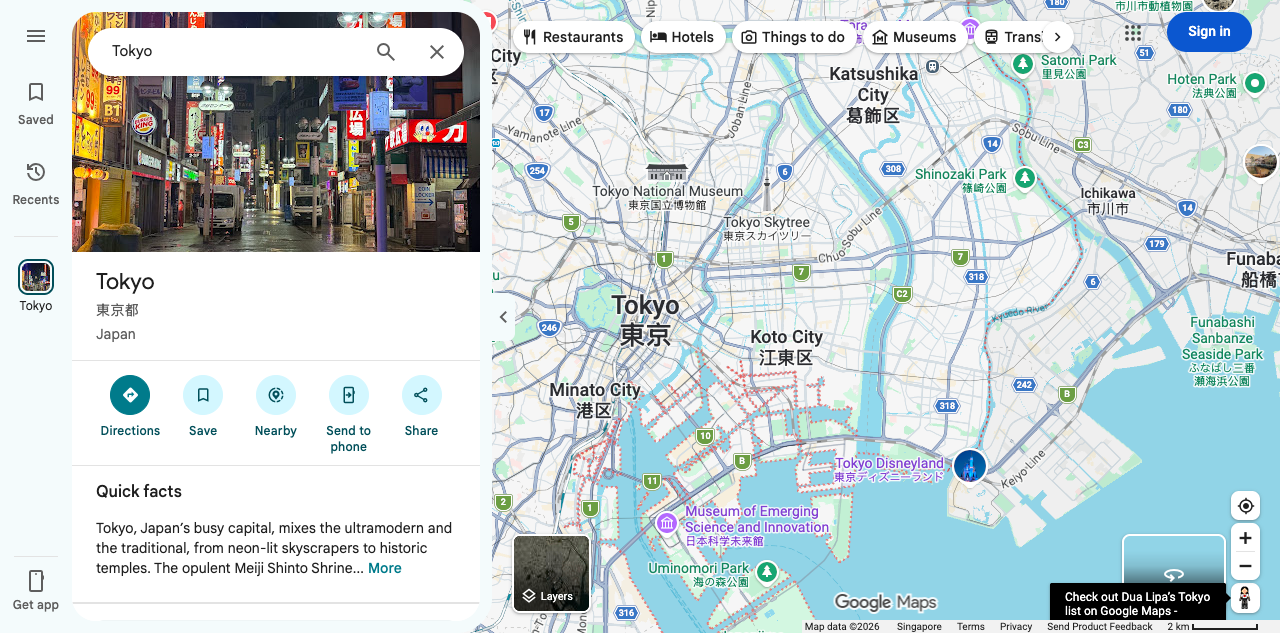
Central Tokyo attraction cluster. How the neighborhoods sit relative to each other: Shinjuku west, Shibuya/Harajuku south, Asakusa/Ueno east, Ginza and Tokyo Station center, Odaiba across the bay. Day plans above are built to avoid criss-crossing this map twice a day.
Winter illumination reference. The evening layer of the trip: Yebisu Garden Place (to ~early March 2027), Marunouchi Nakadori (to ~mid-Feb), Midtown (into late Dec) — with Roppongi Keyakizaka already ended Dec 25, before the family lands.
Dec 31 return-flight price reference. The researched ZIPAIR NRT evening direct at ≈S$942 — the fare snapshot behind the New Year's Eve departure plan. Price scanned at research time; treat as a reference point, not a live quote.
Section 09
Practical panel
Transit money, kid pricing, tax-free rules, reservations, the year-end calendar in one table, and the visa position.
Suica / Pasmo for the family
Get Welcome Suica (or Pasmo Passport) at Narita/Haneda on arrival; Welcome Suica is valid until March 31 following issuance. Kids ages 6–11 ride at half fare with a Child Welcome Suica / child IC — child cards require age verification (the child's passport) and are bought at staffed counters like JR's Midori no Madoguchi; kids under 6 ride free with an adult. The 9-year-old needs the child card; the 13-year-old pays adult fare. Don't ride a child on an adult card or vice versa — adult fare plus penalty applies for misuse.
The pattern: science museums are nearly free for kids (Miraikan ¥210 under-18; Nature & Science free through high school), observation decks charge roughly adult-half for children, and teamLab's 4–12 tier is ¥1,500. The 13-year-old pays teen/adult rates at most venues — the "kids 4–12" tiers mostly no longer apply at 13. Tokyo Subway Ticket passes (24/48/72h) have child versions for 6–11 (source).
Tax-free shopping
Spend ¥5,000+ (ex-tax) same day, same store, and show your passport — non-resident visitors only. Rules tighten from Nov 1, 2026: Japan is shifting toward refund-after-departure/verification systems, so expect passport scanning at purchase and keep every receipt. With the Dec 31 departure, keep the receipts organized through check-out — purchases fly home in the same bags they were verified against.
Tabelog (Japan's Yelp — English site exists but the JP site/app books best; some report needing a Japanese phone number) for restaurants; Pocket Concierge for English-friendly prepaid bookings at high-end/omakase spots; TableCheck for instant free bookings (Gyukatsu Motomura); byFood for food experiences. English menus are near-universal at chains: Ichiran's flavor sheets, Konjiki's printed menus, and picture ordering at kaiten sushi.
Carry cash — Fuunji, Omoide Yokocho and Golden Gai are cash-only, and plenty of others prefer it. Go at 11:00 openings or 17:00 reopens. Check Google Maps "popular times" and Tabelog before walking. The kids make queues survivable with a konbini snack run beforehand — that's the actual pro move.
Mauritian passport holders: Japan is visa-free for 90 days for tourism — no e-visa, no pre-clearance needed for this leg. (The China leg of the trip runs on its own 30-day visa-free arrangement — covered in the Beijing guide.)
NOW — Ghibli Museum tickets (if pursuing): drop was the 10th of the prior month, 10:00 JST; then verify the winter-closure calendar before promising the kids. Highest-risk booking of the trip.
NOW — teamLab Planets December tickets: late-September on-sale has passed; book the remaining December timed slots immediately. Online only, never on-site.
By Nov 26–Dec 1 — Pokemon Cafe: reservations open exactly 1 month ahead and sell out in minutes for the Dec 26–31 window.
By ~Dec 20 — Christmas strawberry cake: pre-order windows close early (some 5 days ahead, family bakeries earlier).
Prices in ¥ are indicative as researched Sept 2026 for travel Dec 26–31, 2026; dynamic-priced attractions (teamLab, observation decks) move daily. Confirm at source before booking.